

Sunday Edition - September 6, 2026
OpenAI’s own landlord just handed it a $5.5 billion stake in the value of its own lease. Let’s get into what that actually means.
THE ONE STORY THAT MATTERED

OpenAI’s SoftBank-owned landlord granted the company warrants now estimated at 5.5 billion dollars, alongside a 20-year lease for a planned 10-gigawatt data center campus in Ohio. The structure is worth understanding because it is unusual. OpenAI is not just leasing space, it is receiving equity-like upside tied to the value its own massive, long-term commitment creates for the landlord entity, SB Energy, before public investors ever get a chance to price that value themselves.
This connects directly to the OpenAI financing story we have tracked for weeks, Nvidia’s reported 250 billion dollar financing backstop, SoftBank’s record bond sale specifically to fund OpenAI commitments. Each of these arrangements shares a pattern: enormous capital commitments structured in ways that create financial upside for insiders closest to the deal, ahead of the broader market having any chance to weigh in.
None of this is illegal or even necessarily improper, complex financing structures like this are common in large infrastructure deals. But it is worth understanding as a founder, because it tells you something about how the biggest players in AI infrastructure are positioning themselves financially while the buildout race continues. If you are relying on the assumption that AI infrastructure costs will behave like a normal, transparent market, arrangements like this are a reminder that a meaningful amount of value creation is happening in structures most outside observers never see until after the fact.
TWO MORE STORIES WORTH YOUR ATTENTION

Hugging Face CEO Clement Delangue said builders and their AI agents uploaded more than 4 petabytes of models and datasets to the platform in a single week, roughly the storage equivalent of 800,000 HD movies. This is a concrete number behind the rent-versus-own trend we covered Thursday. The volume of genuinely usable open-weight models and datasets is expanding at a pace that makes the “should I own or rent my AI infrastructure” question more relevant with each passing month, even if the answer for most founder-sized businesses is still to rent for now.

Google released Gemini 3.7 Flash this week, just three weeks after launching 3.6 Flash, at half the introductory price per million tokens of its predecessor. This is another real, concrete data point in the pricing pressure we have tracked since our token cost coverage a few weeks back. Model providers are not just competing on capability anymore, the release cadence itself has compressed to weeks rather than months, and pricing keeps dropping alongside it. If you have not rechecked pricing on your primary model provider recently, this is yet another reminder to do so.
FROM THE NEON ALIENS DESK THIS WEEK
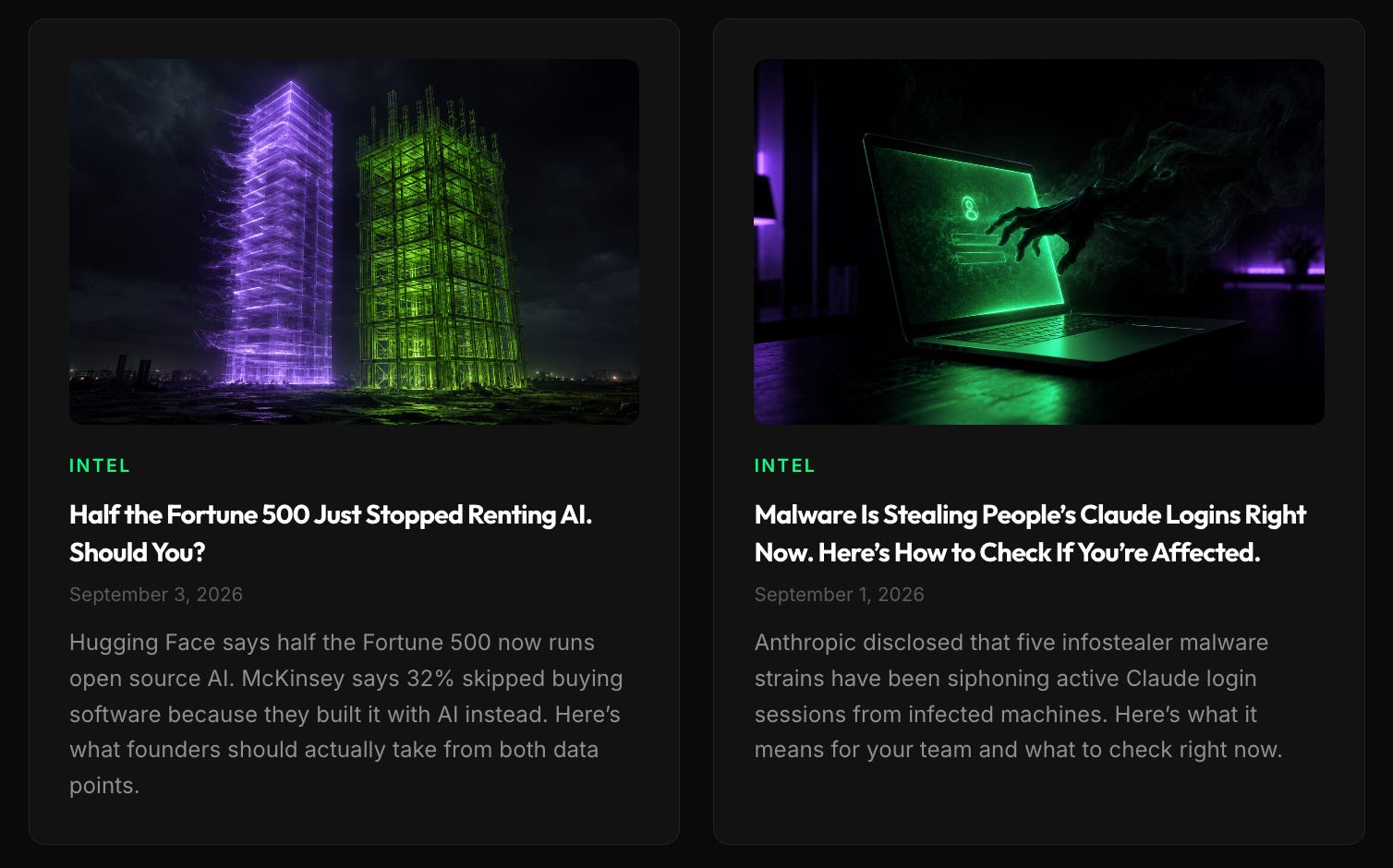
Two articles dropped this week.
Tuesday we covered infostealer malware actively stealing Claude login sessions directly from infected users’ own computers, a genuine, actionable security threat you can check for on your own machine right now. Read it at neonaliens.com/intel/claude-infostealer-malware-founders.html
Thursday we got into the trend of half the Fortune 500 moving away from renting AI through APIs toward owning open-weight models directly, and why that decision almost never makes sense yet at founder scale, even as the build-versus-buy question for internal tools becomes genuinely worth revisiting. Read it at neonaliens.com/intel/rent-vs-own-ai-founders.html
Both connect to this week’s news. Infrastructure, ownership, and where the real financial upside in AI actually sits are the same conversation right now.
If you want to go deeper on building systems around these tools, the community is at skool.com/neon-aliens-ai-1514 and it is free.
PODCAST DROP
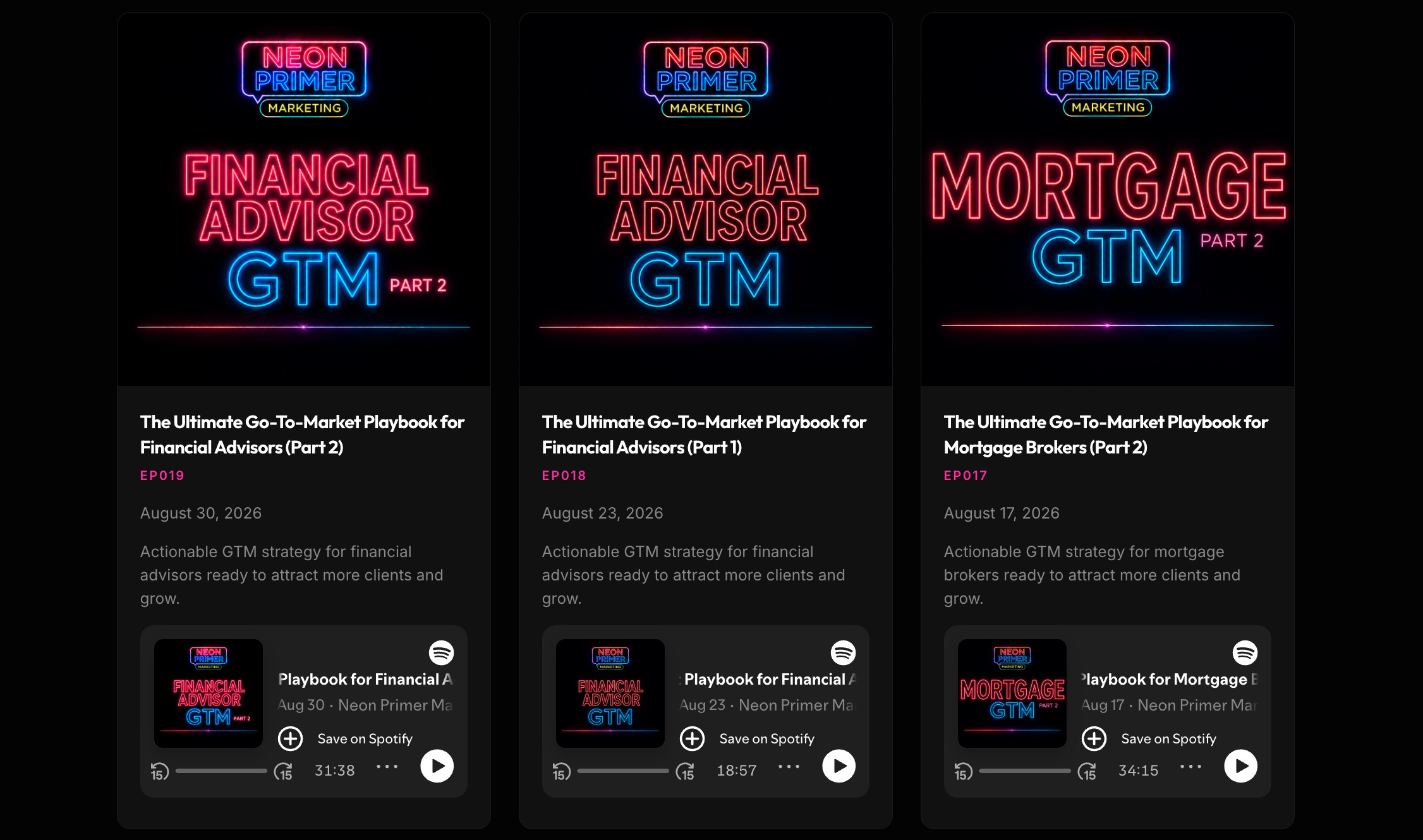
New episode of Neon Primer Marketing dropped last week. EP019 covers part two of the go-to-market playbook for financial advisors. Same format as always, actionable, specific to the vertical, no fluff. Listen at neonaliens.com/podcast or wherever you get podcasts.
INFOGRAPHIC SPOTLIGHT
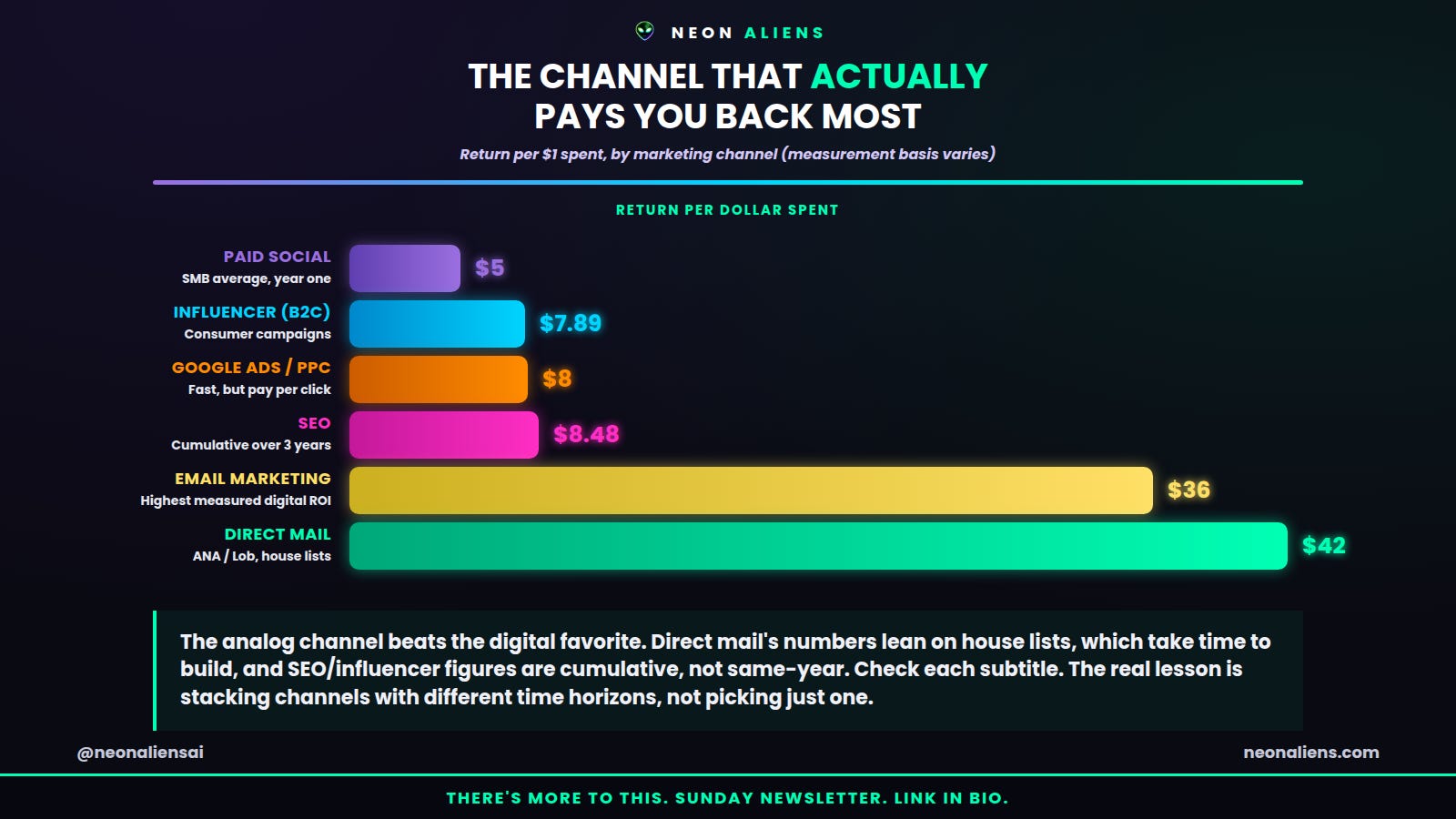
Three visuals on our socials this week at @neonaliensai.
The featured one: The Channel That Actually Pays You Back Most. Paid social averages 5 dollars back per dollar spent. Google Ads and PPC hit 8 dollars. SEO reaches 8.48 cumulative over three years. Email marketing hits 36 dollars, the highest measured digital ROI. Direct mail tops the list at 42 dollars, the analog channel beating every digital favorite. The real lesson is not picking the single best channel, it is stacking channels with different time horizons, since direct mail leans on house lists that take time to build and SEO’s number is cumulative, not same-year.
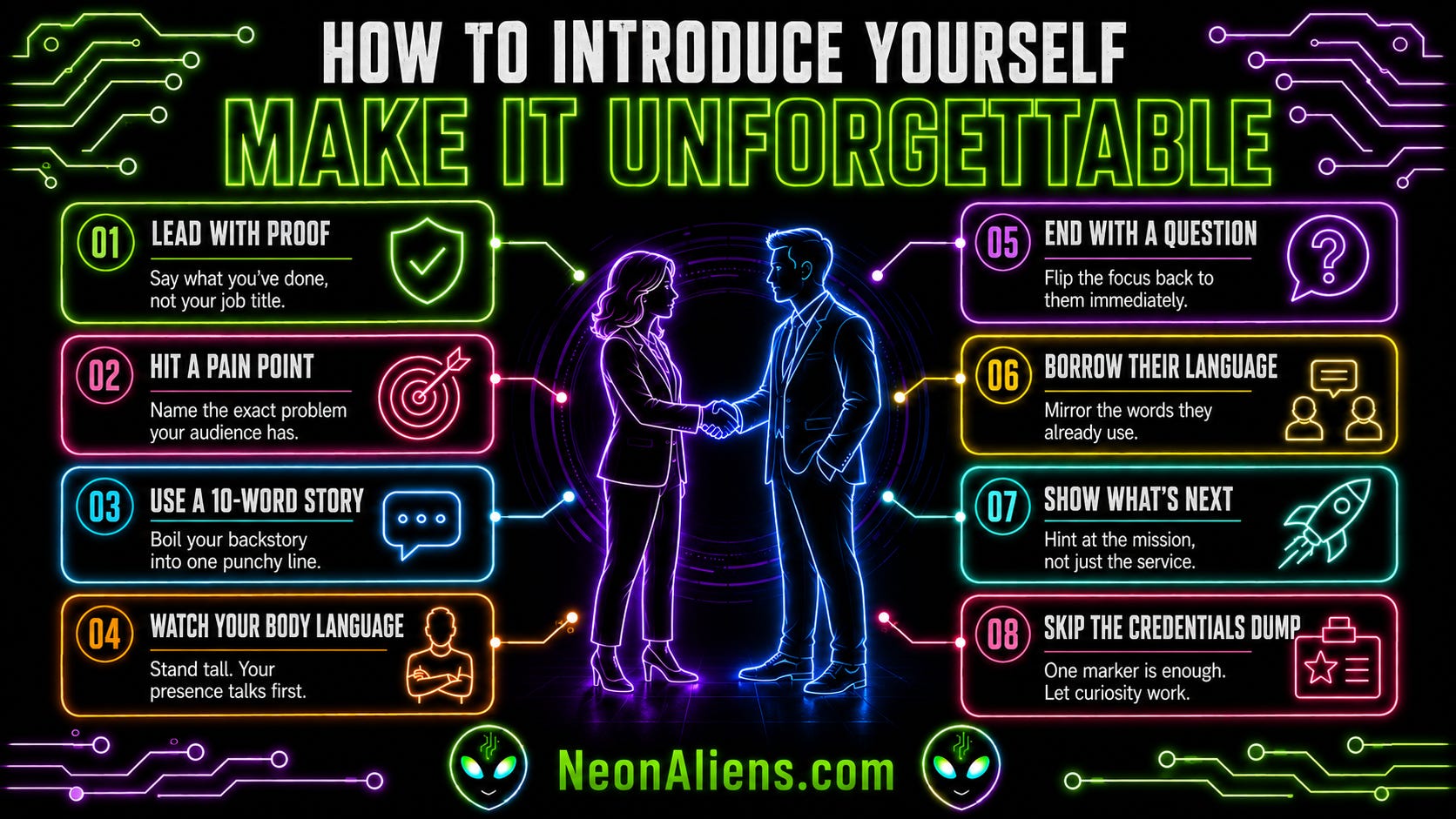
The second graphic breaks down how to introduce yourself so it actually sticks. Lead with proof, say what you have done, not your job title. Hit a pain point, name the exact problem your audience has. End with a question, flip the focus back to them immediately. Skip the credentials dump, one marker is enough, let curiosity do the rest.
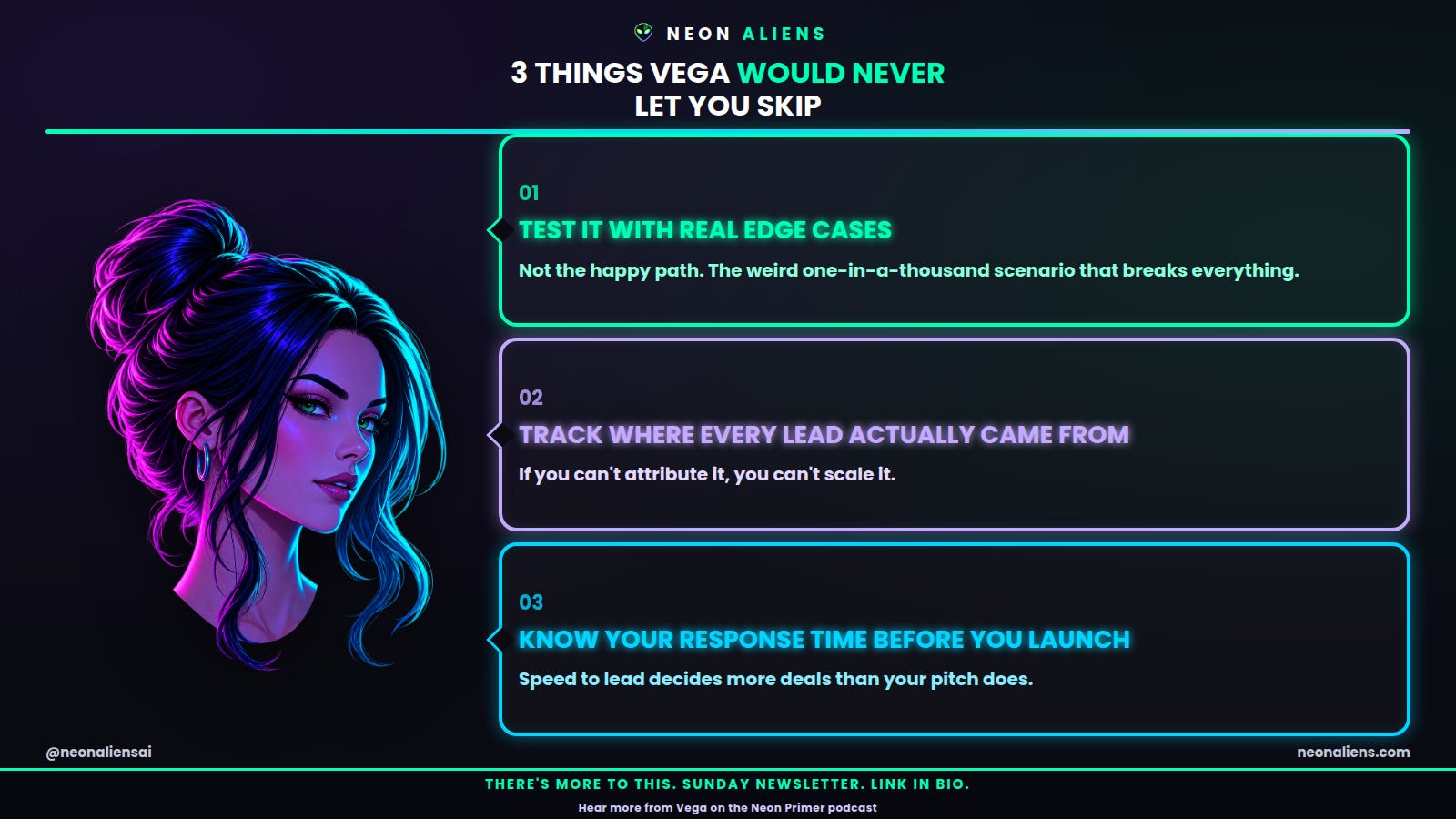
The third covers three things Vega (one of our podcast hosts) would never let you skip. Test it with real edge cases, not the happy path, the weird one-in-a-thousand scenario that breaks everything. Track where every lead actually came from, if you cannot attribute it, you cannot scale it. Know your response time before you launch, speed to lead decides more deals than your pitch does.
All three are on our socials this week.
COMING THIS WEEK
Two articles dropping Tuesday and Thursday. A lot still moving and we are watching it closely.
You’re on this list because you signed up at neonaliens.com or found us through our socials.
Neon Aliens AI - neonaliens.com